
 English

























































































EUR/USD Holds Near Highs as PMIs and US Jobs Data Take Focus

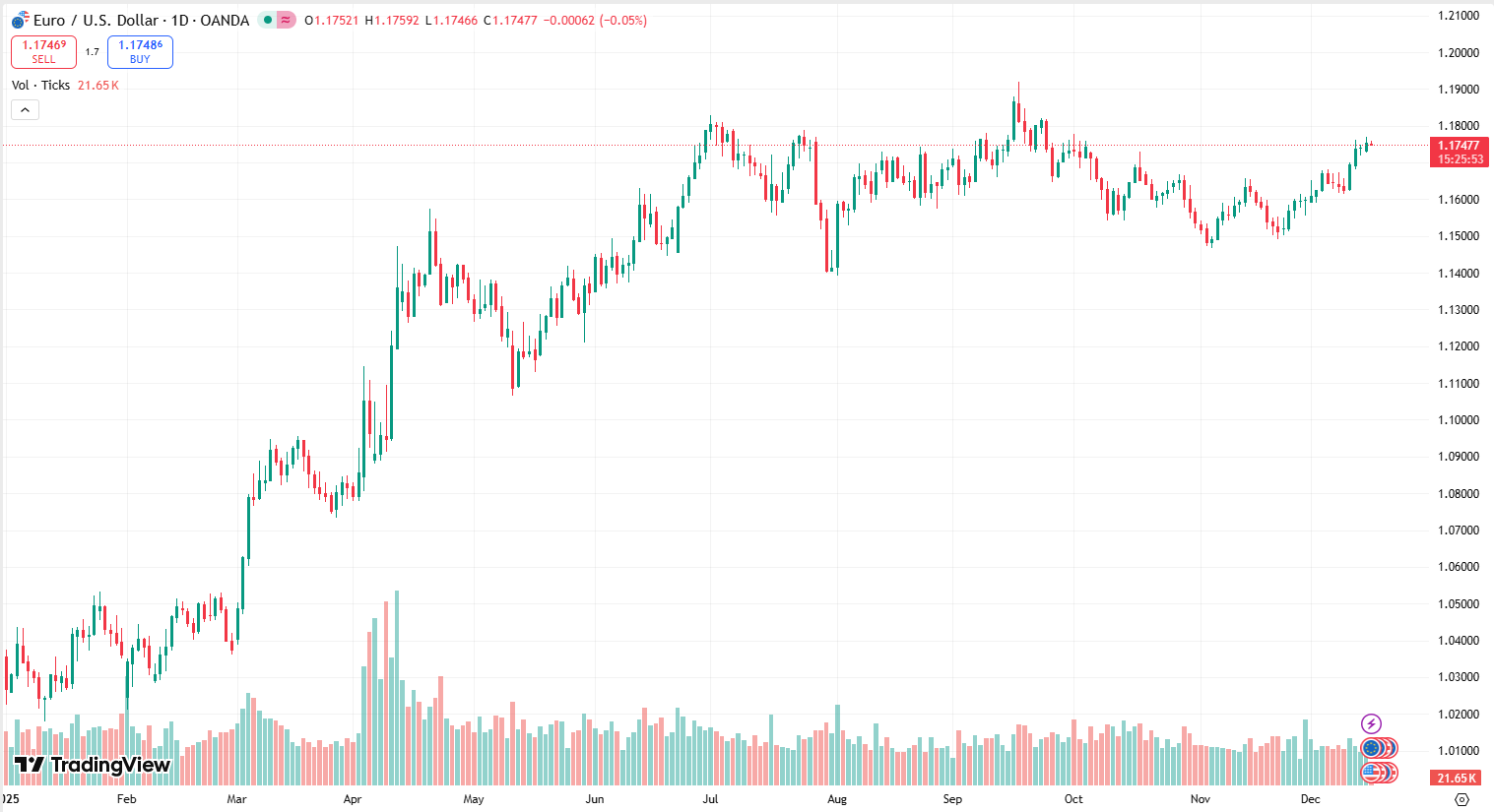
EUR/USD is holding near 1.1750 in early European trade, consolidating just below recent two-month highs as markets digest fresh euro-area data and brace for key US labour releases. The pair remains underpinned by last week’s less hawkish Federal Reserve (Fed) decision, though near-term direction is increasingly data-dependent on both sides of the Atlantic.
In Europe, early attention has turned to the December flash HCOB Purchasing Managers’ Index (PMI) figures. Germany’s composite PMI dropped more than expected to 51.5 in December from 52.4 in November, showing that growth is slowing in the region’s biggest economy. Although activity is still expanding, the slowdown comes from weaker services and another decline in manufacturing.
Germany’s Services PMI fell to 52.6, missing expectations and the prior month’s 53.1 reading. More notably, the Manufacturing PMI unexpectedly slipped further into contraction at 47.7, undershooting forecasts for a modest improvement. Hamburg Commercial Bank’s Chief Economist Cyrus de la Rubia said the data show “a further downturn in the manufacturing sector,” and warned that weaker order flows could hurt growth prospects in early 2026.
Eurozone-wide PMI figures are due later today, with markets watching closely to see whether resilience in services can offset persistent manufacturing weakness. A stabilising euro-area composite reading could help limit downside pressure on the single currency.
In the US, focus is shifting toward the delayed Nonfarm Payrolls (NFP) reports for October and November, due Tuesday. Recent indicators, including elevated jobless claims and softer private payrolls, have raised concerns over labour-market cooling. With the Fed now in wait-and-see mode, the employment data will be critical in shaping expectations for the pace of policy easing in 2026.
For now, EUR/USD remains supported by a steady ECB stance and restrained dollar demand, though momentum may soften if European data continue to disappoint. The EUR/USD exchange rate remains anchored near recent highs, with near-term direction hinging on European PMI outcomes and upcoming US labour data that will shape expectations for the Fed’s next move.
GBP/USD Holds Steady as Markets Await UK Labour Data
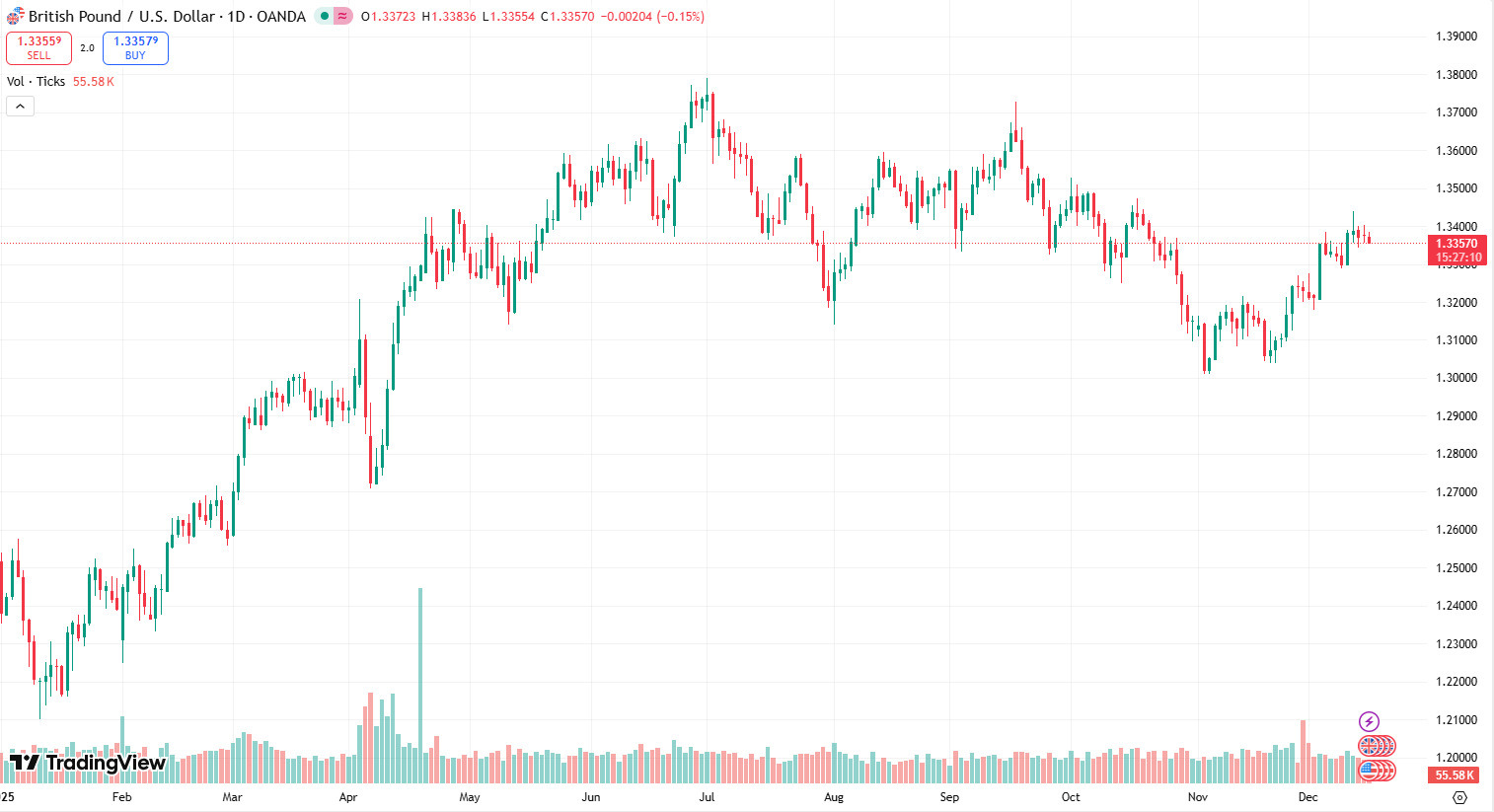
GBP/USD is stable above the mid-1.3300s in early Tuesday trading, staying close to 1.3365. Markets are cautious as they wait for important UK labour data and the Bank of England’s policy decision later this week.
Markets are now focused on the UK labour market report. The ILO unemployment rate is expected with a small rise in the claimant count. Wage growth might slow slightly but is likely to remain elevated, keeping average earnings above the BoE’s inflation target. If employment or wage numbers are weaker than expected, the chance of a BoE rate cut on Thursday could rise, which would put more pressure on the pound.
A weaker US dollar is offsetting some pressure on the pound. Even though risk sentiment has improved, the dollar is still held back by expectations of more Fed rate cuts in 2026. Anticipation of more dovish Fed leadership has also limited a dollar rebound, supporting GBP/USD above its 200-day simple moving average near 1.3350. This level is now an important short-term marker.
Following today’s labour data, traders face a busy week ahead. UK inflation figures will be released on Wednesday, and the BoE’s rate decision on Thursday is expected to determine the pound’s near-term direction. In the US, delayed Nonfarm Payrolls and inflation data later this week will influence dollar movements. The GBP/USD exchange rate remains anchored in a narrow range, with direction likely to be set by today’s UK labour data and Thursday’s Bank of England decision.
USD/JPY Extends Decline as BoJ Hike Bets Support Yen
The Japanese yen strengthened for a second consecutive session on Tuesday, pushing USD/JPY to 154.91; its lowest level in about a week during Asian trading. Expectations that the Bank of Japan may raise interest rates at its next meeting drove this move. Additionally, caution in global stock markets increased demand for the yen as a safe-haven currency.
Recent remarks by BoJ Governor Kazuo Ueda have strengthened the belief that Japan is close to reaching its 2% inflation goal. As a result, markets expect the central bank will shift away from its loose monetary policy, supporting the yen. However, concerns remain about Japan’s fiscal outlook following Prime Minister Sanae Takaichi’s call for increased government spending.
The dollar remains weak, trading near multi-week lows, as markets expect the Fed to continue easing policy into 2026 amid slowing US job growth. This contrasts with the Bank of Japan’s potential tightening, causing USD/JPY to trend lower and extend its recent decline.
USD/JPY has repeatedly failed to break above 155.00 and has now fallen below short-term moving averages, increasing bearish momentum. While further losses may prompt caution ahead of the BoJ meeting, any rallies are likely to be brief unless the pair moves back above the mid-155 range. The USD/JPY exchange rate remains under pressure as BoJ hike expectations and Fed-BoJ divergence continue to favour yen strength ahead of this week’s policy decision.

USD/CAD Holds Steady Ahead of Delayed US Jobs Data
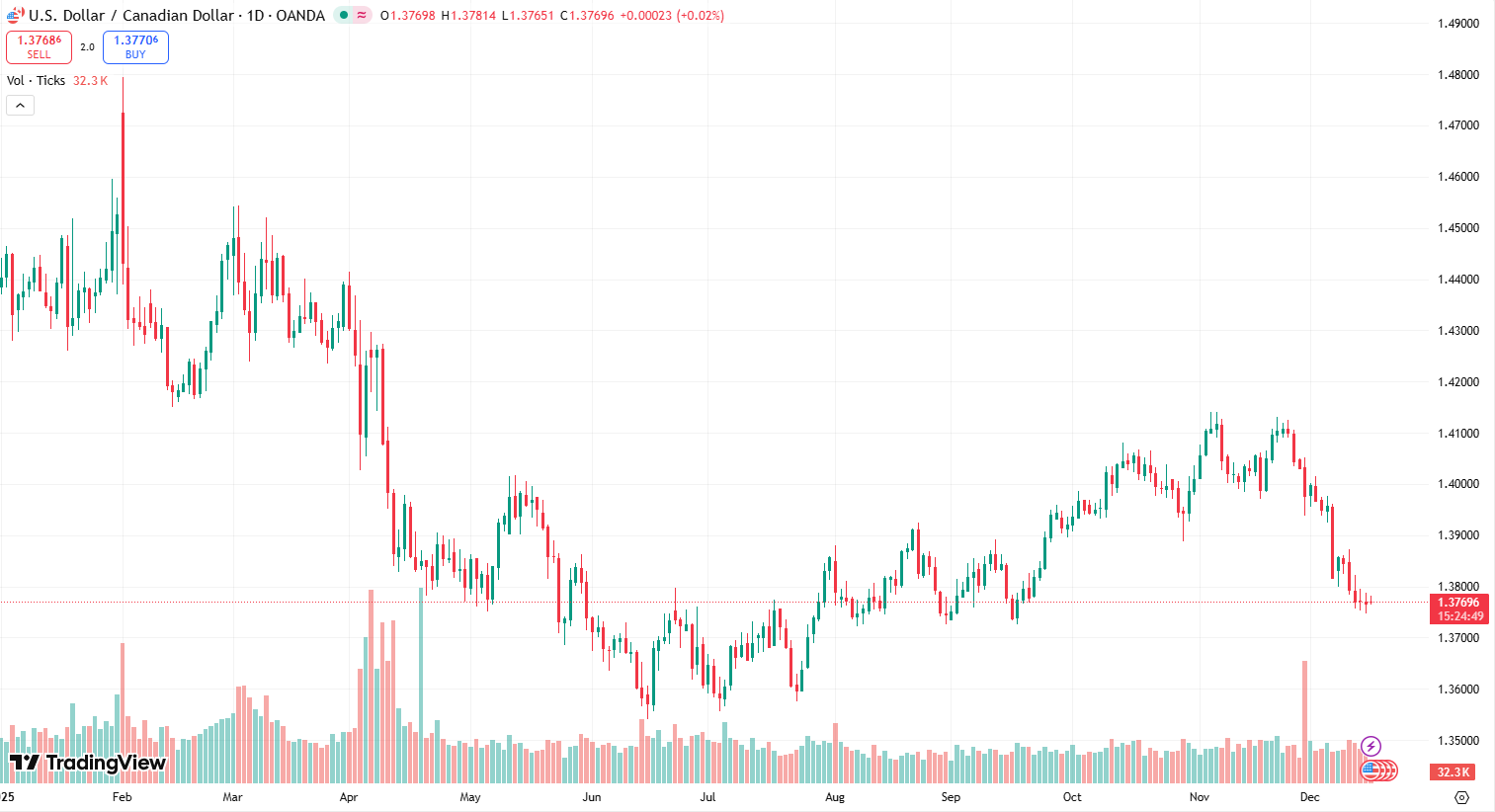
USD/CAD remained near 1.3770 during Tuesday’s Asian session as markets awaited the delayed US Nonfarm Payrolls (NFP) report for October and November. The pair traded quietly, with the US dollar at an eight-week low amid uncertainty over near-term US labour demand.
The market is paying close attention to the combined NFP release to see how fast the US labour market is slowing, which will influence expectations for Fed policy. Analysts suggest that the unemployment rate will stay at 4.4% in November, but recent data shows hiring has slowed. If the numbers are weaker than expected, it could increase the chances of more Fed rate cuts next year and put pressure on the dollar.
In Canada, the loonie stabilized following the release of November inflation data. Headline CPI increased 2.2% year-over-year, below expectations, while core inflation remained near 2.9%. The Bank of Canada considers its current policy appropriate, indicating little urgency for further rate changes.
With both central banks waiting to make their next moves, USD/CAD is staying in a tight range as traders look ahead to important US data. The USD/CAD exchange rate is likely to remain confined near current levels until US labour data clarifies the outlook for Federal Reserve policy.